

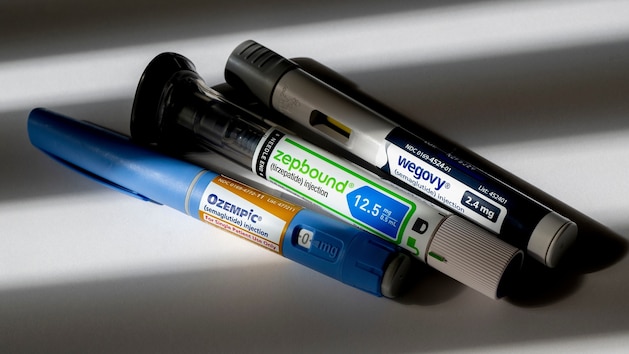
After years of fertility treatments to become pregnant with her first two children, 30-year-old Ashlee Amborn was shocked to learn she was pregnant with her third child just four months after her second was born. The solution, she said: a GLP-1.
Amborn had struggled for years with several conditions that made it difficult to become pregnant, including polyendocrine metabolic ovarian syndrome (PMOS) (formerly known as polycystic ovarian syndrome), a single functioning fallopian tube instead of two, one half of a uterus and only two functioning ovaries, she told ABC News.
When her PMOS symptoms flared up after her second child, including severe inflammation and hormone imbalance, Amborn said she felt she needed to take action.
A medical professional recommended she take a GLP-1 to help with her PMOS symptoms, and after just one month of taking the medication, she was pregnant, she said.
“It was kind of these mixed emotions of, ‘Holy cow, I’m pregnant,'” Amborn said. “I did this on my own without fertility treatment. All it took was a GLP-1. … It was this kind of crazy feeling that I had had was, ‘What is going on and how did this happen?'”
A recent review of this topic published in a South American medical journal suggests a possible link between GLP-1 usage and improved fertility outcomes in women with obesity and PMOS, especially those who are also taking an oral diabetes medication, metformin.
According to the authors, one possible explanation for this is improved insulin resistance from weight loss on GLP-1s, which is associated with potential reproductive health benefits, including improved ovulation rates and decreased likelihood of ovarian dysfunction.
Dr. Jacinta Anyaoku, a physician at Maven Clinic specializing in obesity and women’s health in midlife, told ABC News that while there are no studies that make a direct correlation between ovulation rates and GLP-1 use, she has observed among her patients that it can help.
“When you lose weight, your inflammation goes down,” Anyaoku said. “It actually can help with improving your rate of ovulation. Your egg quality could potentially improve if you have reduced inflammation, and so these are all potential effects that come with GLP-1 use.”
However, GLP-1s are not routinely prescribed as standard of care for fertility treatments, and they are not meant to replace other fertility drugs, according to health experts.
“It is important to discontinue your GLP-1 prior to pregnancy,” Anyaoku said. “The current recommendation is to stop taking your GLP-1 about two months prior to starting to try to conceive.”
Karen Berger, a pharmacist at an independent pharmacy in New Jersey, told ABC News that “the prescribing information for GLP-1s recommends that patients discuss pregnancy plans with their healthcare provider and contact them right away if they become pregnant while using one of these medications.”
Amborn said she was shocked when she got pregnant so easily after taking a GLP-1, as she was told by multiple doctors in the past that it would be very difficult to get pregnant at all, or maybe even impossible.
“When I got pregnant four months postpartum on a GLP-1 I said, ‘Where has this been?'” Amborn said.
The American College of Obstetricians and Gynecologists warns against the use of GLP1s during pregnancy or breastfeeding. It recommends that once breastfeeding has ended, starting a GLP-1 may be considered for some women to support their overall health.
In general, the decision to start a GLP-1 should be part of an individualized plan that is made with a healthcare professional.
Copyright © 2026, ABC Audio. All rights reserved.
