

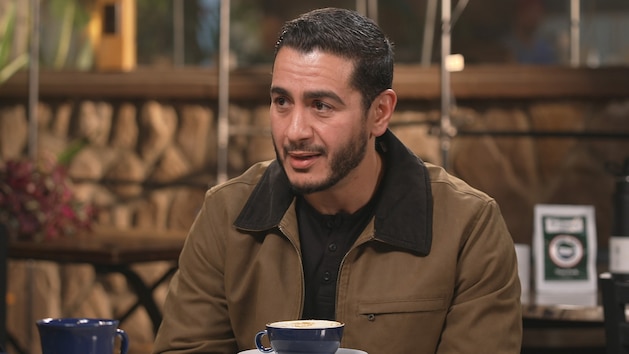
In the final days of his tight Senate race in Michigan, Democratic candidate Abdul El-Sayed said attacks by President Donald Trump and Republicans on his faith and ethnicity are meant to distract from the struggles Americans are facing nearly two years into President Donald Trump’s second term.
El-Sayed’s race against Republican Mike Rogers is one that could determine which party controls the Senate in the next Congress. A Fox News poll conducted in late September found the race essentially tied among likely voters, with El-Sayed at 50% and Rogers at 49%, well within the poll’s margin of error.
El-Sayed has been the subject of frequent attacks by national Republicans –including Trump, who repeatedly calls him by his middle name “Mohammed” and has urged voters to reject candidates like him to “preserve our religion, our values, and our heritage.” El-Sayed was born in Rochester Hills, Michigan, to Egyptian immigrant parents.
El-Sayed told ABC News Live anchor Linsey Davis, “They think they can point to my name and my faith and distract us from the fact that we can’t afford our gas and we can’t afford our groceries.”
‘Israel is not actually our friend’
El-Sayed, who has long been against unchecked U.S. military support for Israel, told ABC why he does not consider Israel to be a friend to the U.S.
“An ally that takes your money to push you into wars you shouldn’t be fighting is not an ally,” El Sayed said. “I think it’s time for us to realize that like, Israel is not actually our friend.”
The White House has strongly denied that it was pushed into war in Iran by Israel.
El-Sayed was criticized after a town hall last month for not directly answering whether he condemned Iran’s Islamic Revolutionary Guard Corps.
Asked about that by Davis, he said, “I condemn a lot of their action, but if you want a pathway to peace with folks, you’re going to have to figure out how to get to a position of peace.”
“They’ve engaged in horrific acts. There’s no question about that,” El-Sayed said of the Iranian regime.
“I condemn the attacks on democracy that Iran has done, but we engage with actors in a world where you kind of have to figure out how to make peace with people you disagree with.”
El-Sayed said the U.S. shouldn’t have “torn up” the nuclear deal between Iran and the U.S., its European allies and Russia.
“We were in a position for nuclear containment and we were in the position of peace. We should have not gone to war in the first place,” El-Sayed said.
He also said that Israel should not be considered a US Ally- saying “An ally that takes your money to push you into wars you shouldn’t be fighting is not an ally.”
Medicare for all is ‘like climbing Mt. Everest’
El-Sayed has long been a proponent of Medicare for all — the single-payer, government-run healthcare system that would replace private insurance companies.
When pressed on whether an overhaul on that scale could be accomplished, El-Sayed compared it to mountain climbing.
“I kind of think about it like climbing Mt. Everest, right? Maybe you’re not going to be able to climb Mt. Everest in one big go, I understand. So to me, I’m looking at anything that can increase healthcare access, reduce the power of big corporations and increase the public footprint — those are things that I see as viable steps on the pathway to Medicare for all.”
Tariffs on Michigan’s northern neighbor
The interview took place in Sault Ste. Marie on Michigan’s Upper Peninsula, which borders Canada, and El-Sayed condemned Trump’s trade war with America’s northern neighbor.
“Starting a tariff war with Canada is an insane thing to do. And we pay for it,” he said. According to a study by the National Taxpayers Union Foundation, Michigan households have seen an average additional cost of $5,600 due to tariffs since January 2025, the most of any state.
When asked if there were any specific tariffs he would support, he cited placing tariffs on Chinese electric vehicles to support the American auto industry, a policy backed by the United Auto Workers Union, which has backed EL-Sayed.
Parenting while campaigning
El-Sayed said the hardest part of the campaign trail isn’t missing “the headline moments,” like recitals or games, but, “It’s those interstitial moments, the cement between the bricks. And so there’s a lot of sadness about missing some of those moments.”
He credited his wife, Sarah, with maintaining normalcy in their home and helping their kids avoid seeing negative ads, saying “the TV doesn’t go on in our house.”
ABC News’ Lindsey Griswold and Alturo Rhymes contributed to this report.
Copyright © 2026, ABC Audio. All rights reserved.
