

By Steven Stilt
The Kaskaskia College Board of Trustees on Monday night received an overview of the school’s tentative Fiscal Year 2026 budget and also received positive news about the end result of Kaskaskia’s FY 2025 budget.
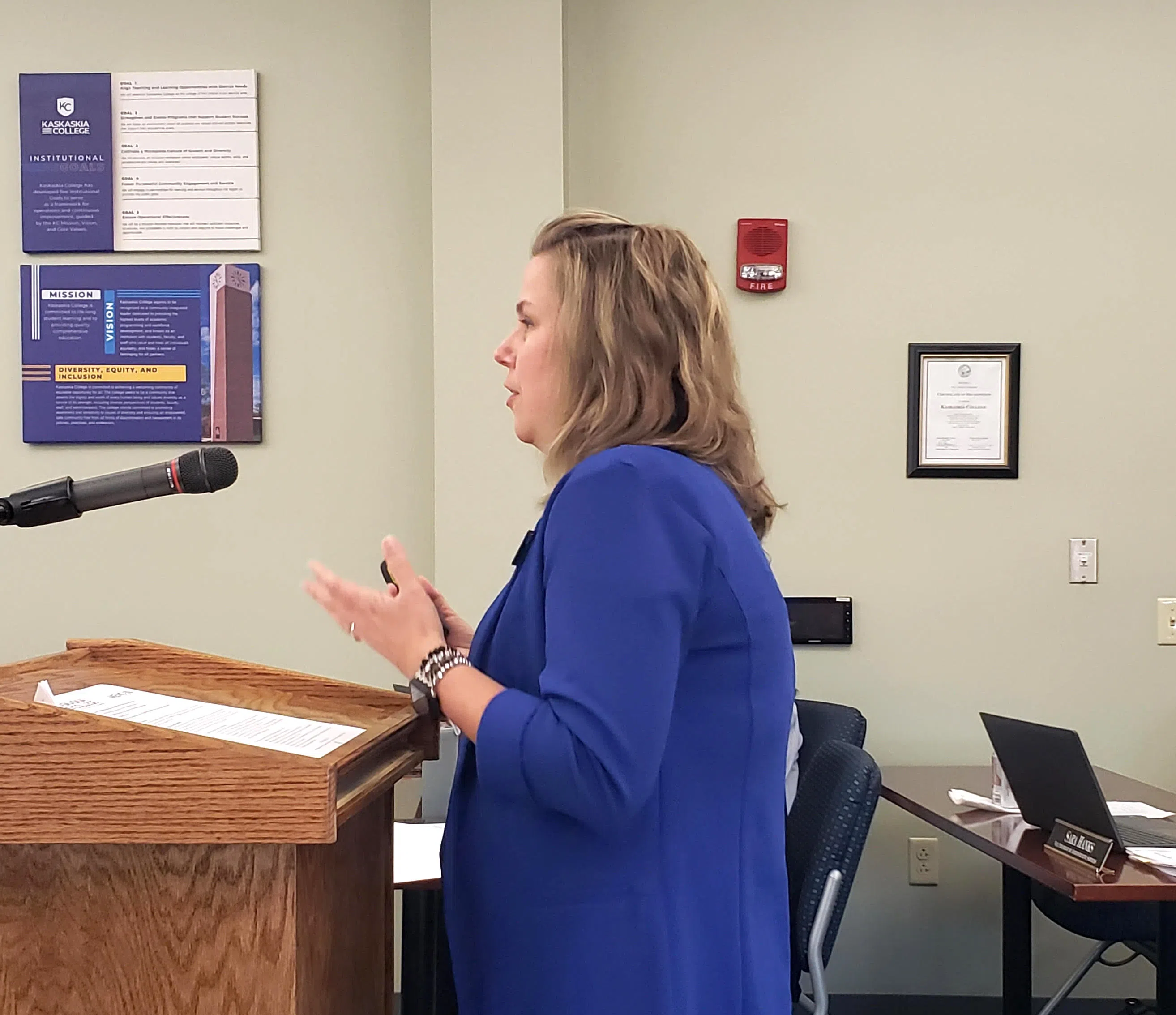
Sara Hanks, KC’s vice president of administrative services, told trustees that the FY 2026 budget contains a projected deficit of just over one million dollars, with approximately $33.7 million in anticipated revenues versus $34.7 million in projected expenditures. College officials expect to see higher expenses in areas such as employee health insurance and campus utilities.
Hanks reported that the school’s FY 2025 budget, which had originally contained a projected shortfall of more than $400,000, actually finished with a surplus of nearly $1.5 million. Strong investment revenue and higher-than-projected tuition and fee revenues more than offset property tax figures that came up short of projections.
KC President George Evans says the college always maps out its budget with conservative revenue figures and more aggressive expenditure projections, so school officials hope the tentative 2026 budget, like last year’s budget, will end up trending in a positive direction.
“We usually budget on a flat enrollment trend compared to the previous year,” Evans said. “Last year we saw some definite enrollment increases, where you saw the income of tuition revenue, we were up by about $800,000. … I’m very pleased with the way that the year played out, and I hope that we can follow that same trajectory for this coming fiscal year.”
A public hearing on the FY 2026 tentative budget will be held at 6 p.m. September 22nd, in advance of the board of trustees’ regular meeting which will take place at KC’s Crisp Center in Centralia.
In other business on Monday, the board approved the inactivation of the culinary arts program. College officials cited the recent resignation of program coordinator Robert Rhymes and a declining number of students participating in the program. For those already in the culinary arts program, a “teach out” plan has been put in place, which will involve adjunct professors teaching the remaining courses.
In personnel action, trustees approved the hiring of Alison Bauza as a regional support specialist.
